



Only around 3% of applications lead to interviews.
In a large-scale 2025 analysis across 10+ million job applications from 27 studies, candidates needed an average of 42 applications to land one interview.
In 2026, it’s only getting more competitive. More graduates are entering the market, while layoffs, funding cuts, and global uncertainty continue to tighten hiring.
For international students and early-career professionals, this challenge is even more complex, because you’re not just competing on skills, but doing all of this in a second language, within a different hiring culture.
You’ve probably heard this before:
“I applied to 100+ jobs.”
“I only got 2 interviews.”
“I don’t know what I’m doing wrong.”
This is more common than you think. You’re not alone.
Interestingly, most CVs don’t fail because candidates are unqualified. In fact, many international students have strong experience and solid academic backgrounds. They fail because their value is not immediately clear.
Why good candidates get ignored
Let’s flip the perspective for a moment. Instead of thinking about how you write your CV, think about how it’s read. Employers don’t read CVs the way you think they do.
They scan very quickly, often in under 10 seconds.
They’re not reading every line, they’re looking for signals, for example:
- relevance
- clarity
- evidence
If those signals aren’t obvious, they move on.
Unique challenges international students face
Beyond general competition, international candidates often deal with additional layers:
visa-related constraints limiting opportunities
unfamiliarity with Australian hiring expectations
- lack of local experience
- overly academic or “textbook” writing style
- difficulty translating achievements into business value
- cultural differences in self-presentation
Common Mistake #1: Formatting nightmare
Format matters more than you think. If your CV is hard to read, nothing else gets considered.
- overly designed templates (too many colours, icons, graphics)
- inconsistent alignment and spacing
- including personal details (photo, age, nationality) not expected in the US, UK, Australia and most Western countries
Scenarios:
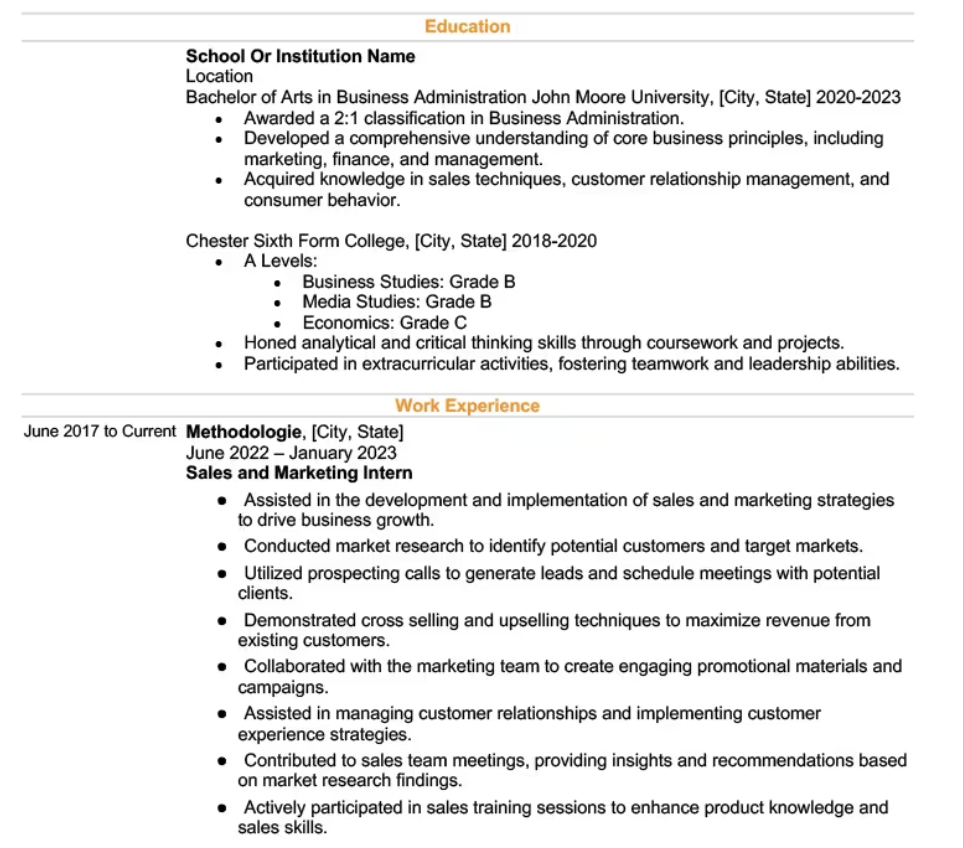
Feels messy → Skipped
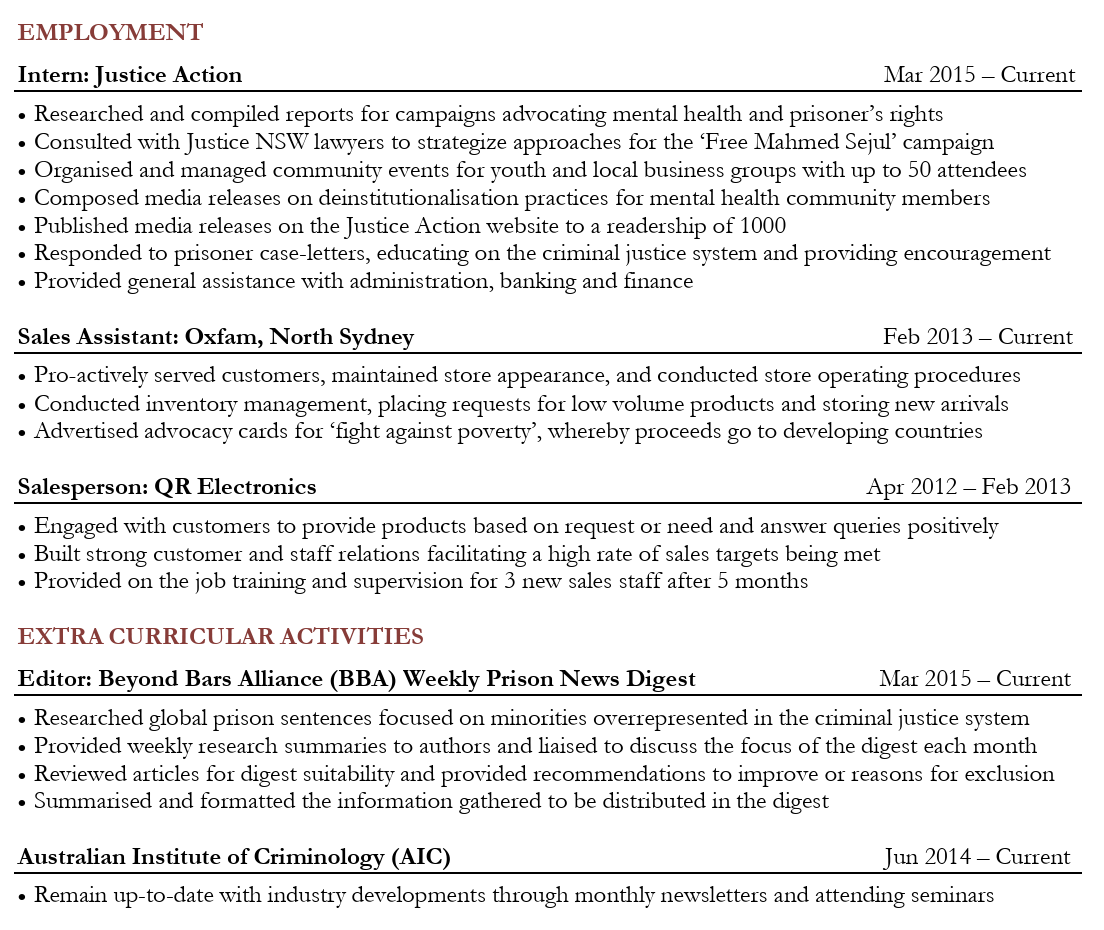
Easier to scan → More likely to be considered
Common Mistake #2: Turning your CV into a biography
A CV is not your full story. It’s a selection of what matters.
Weak pattern:
- long paragraphs
- everything included
- repeated “responsible for…” statements
Scenarios:
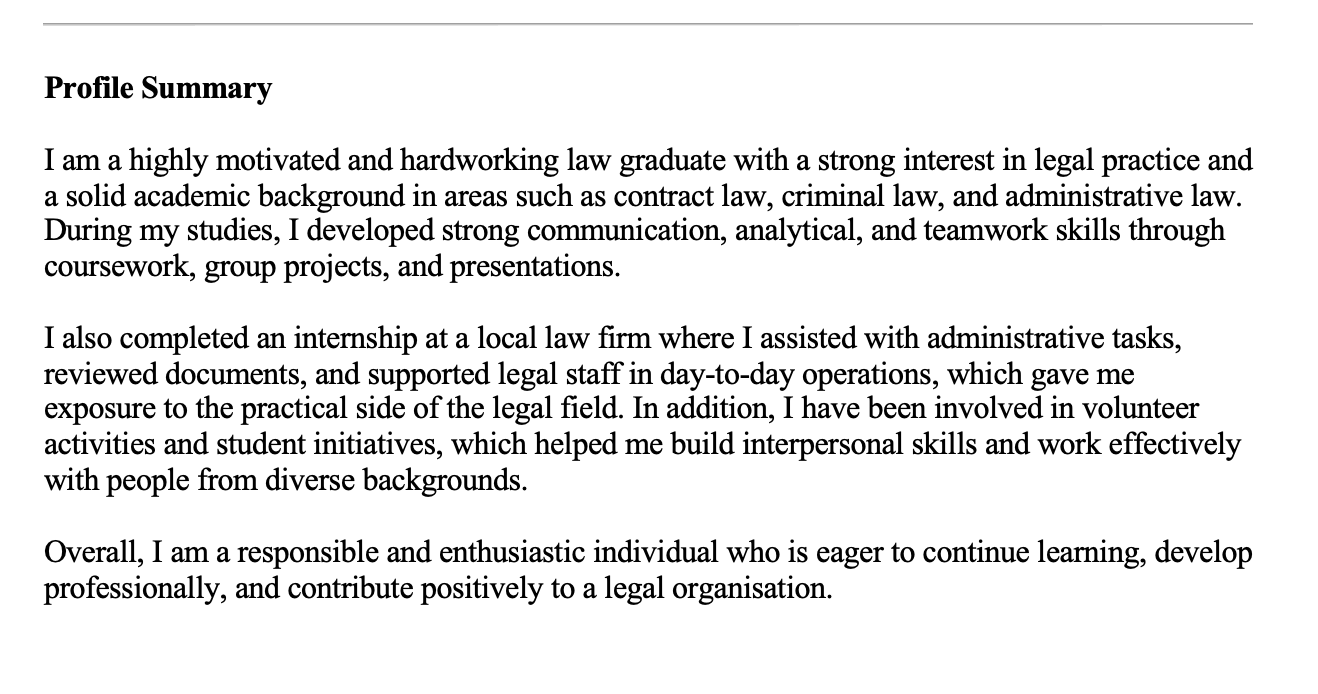
A recruiter reads this and still asks: “Why you? What makes you stand out from 100 others?”
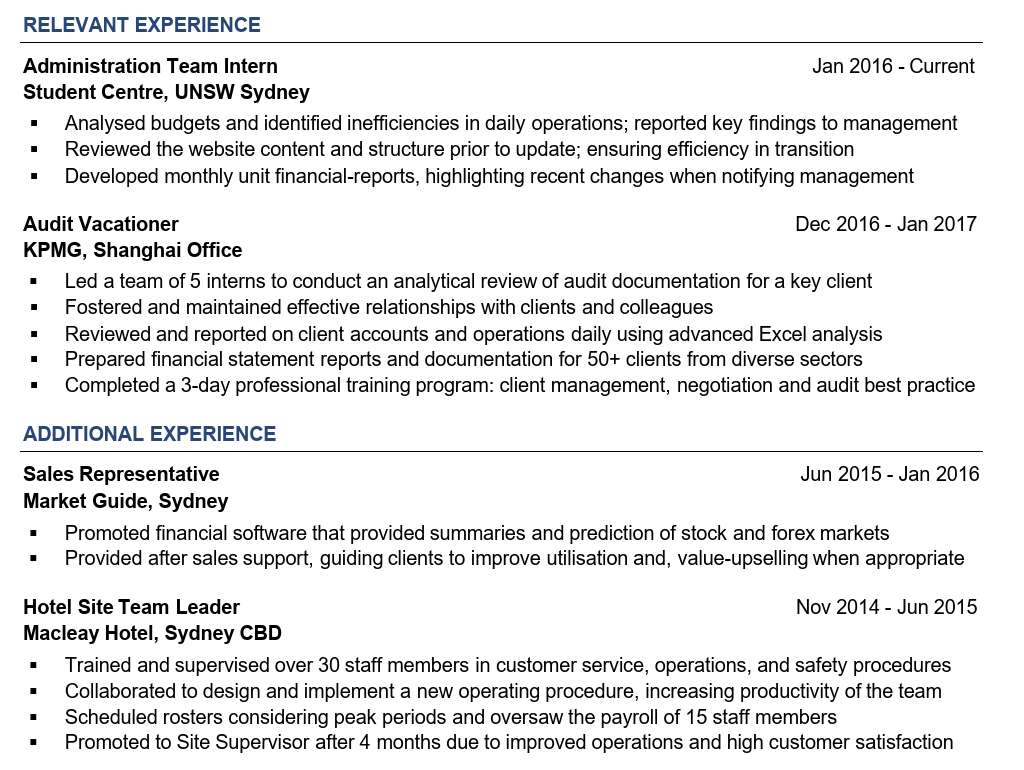
Strong patterns, on the other hand, include:
- using clear and less ambiguous language
- being selective with experiences rather than listing everything
- focusing on impact and outcomes
Common Mistake #3: Generic language
Generic language feels safe, but it signals nothing. People may have strong skills and genuine interest.
But without clear evidence, none of that is visible to the employer.
Weak example:
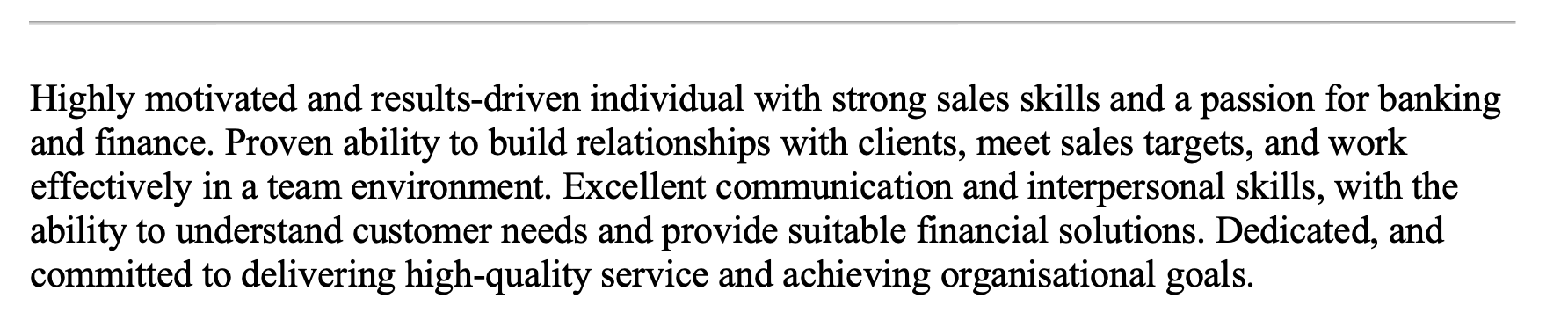
What’s missing are concrete examples of outcomes and impact from their past work.
Instead, aim for something like:

Why this works?
- more specific
- measurable (with quantifiable evidence)
- impact-driven
Common Mistake #4: Tasks instead of outcomes
Many CVs describe what was assigned, not what was achieved. And this isn’t just for technical roles, it applies across industries, including education, social sciences, etc.
Let’s compare two candidates applying for the same teaching position:
Candidate A:

Candidate B:

See the difference?
Both candidates may have done the same job, but the first only lists responsibilities. It feels vague, and realistically, hundreds of other teachers could say the same thing.
The second candidate, however, provides more quantifiable results, making it much easier to understand their actual impact.
Now, to summarise, what do strong CVs have in common?
Across industries, strong CVs consistently demonstrate:
- Clarity: easy to read and quick to understand
- Relevance: aligned with the role and industry
- Evidence: clear impact, scale, and measurable results
- Readability: clean structure, formatting, and organisation
- Intentionality: every section should serve a purpose, not just fill space
What to do next (quick check)
Take 5 minutes and go through your CV:
✅ Can someone understand what role I’m targeting within 10 seconds?
✅ Am I using generic phrases instead of real examples?
✅ Do I show clear impact (numbers, outcomes, scale)?
✅ Is my CV easy to scan (not dense, not cluttered)?
✅ Does it match expectations in the Australian job market?
If you ticked “no” to even one, that’s likely where the issue is.
References:
1.https://www.forbes.com/sites/rachelwells/2025/12/31/7-data-backed-ways-to-get-up-to-18x-more-job-interviews-in-2026/
2.https://www.unsw.edu.au/content/dam/pdfs/employability/2023-04-employability/2023-04-employability-resources-resume-guide.pdf